We Tested Every Type of AI SEO Tool on the Market. Here's Why Most of Them Don't Work
After 6 weeks of real-world testing across every SEO tool category, one thing became clear: most tools are solving the wrong problem. Here's the full breakdown — and what actually works.

Rachel Simmons
MarTech Analyst
 March 2026
 61,204 views


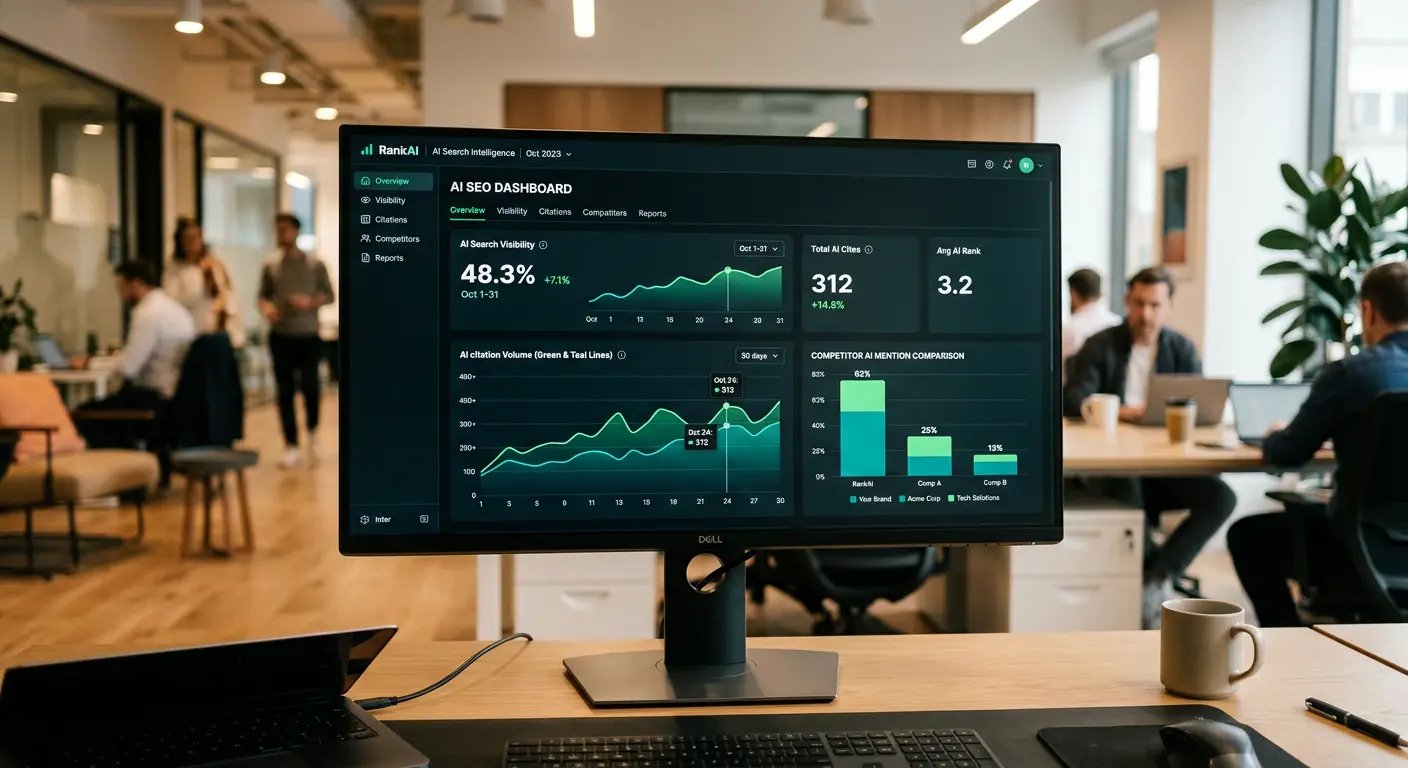
Every SEO tool vendor will tell you they've cracked the AI search era. Every demo is smooth. Every product page is full of impressive-sounding features.
So we stopped reading product pages. We ran the tools against real-world B2B use cases for six weeks — and what we found should concern anyone who takes their organic search seriously.
The core problem isn't that today's SEO tools are bad. Many of them are genuinely impressive pieces of software. The problem is that they were built for a different era — one where Google was the only gatekeeper between your content and your customers. That era is ending. And most tools haven't caught up.
We categorized every tool type we tested, documented what each category gets right, where each one falls short, and what the gap means for your business in 2025.
One platform we tested didn't fit any of the existing categories. We'll get to that at the end.
What we tested for — the four criteria that matter in 2025

AI Citation Tracking — does it show you how often your brand is cited by ChatGPT, Perplexity, Gemini, and Google AI Overviews?
GEO Gap Analysis — does it identify why competitors are getting cited in AI answers instead of you?
Actionable Output — does it produce recommendations your content team can actually execute?
Traditional SEO Integration — does it still cover keywords, backlinks, and rank tracking?
We weighted AI citation tracking and GEO gap analysis most heavily. These are the capabilities that determine the majority of organic discovery in 2025 — and they simply did not exist in any SEO tooling two years ago.
The tool categories we tested — and where each one falls short
Traditional Keyword & Backlink Platforms
Strong foundation. AI-blind.These are the platforms most SEO professionals have relied on for years — and for good reason. Keyword research, backlink analysis, site audits, competitive intelligence: all genuinely excellent. The data is deep, the interfaces are polished, and the reporting is reliable.
But ask any of them to tell you your AI citation share across ChatGPT or Perplexity, and you'll get nothing. No GEO tracking, no AI visibility dashboard, no way to understand why a competitor is being recommended by AI models instead of you. These platforms measure Google. They do not measure the AI layer that's now sitting on top of it.
Content Optimization Tools
Optimizing for the wrong algorithm.Content optimization platforms focus on analysing top-ranking pages and guiding writers on how to structure and score their content. Useful for writers who need data-driven guidance. The top tools in this category have loyal user bases for a reason.
The fundamental limitation: these tools optimize for Google's ranking signals, not for AI citation signals. Content that ranks #1 on Google is frequently ignored by AI models in favour of content that is more structured, more specific, and more definitively citable. These platforms don't measure or optimize for those criteria — because they were never built to.
Enterprise SEO Suites
Scale without the right metrics.Enterprise SEO platforms offer genuine scale and solid reporting infrastructure, and many have begun adding AI-related features in response to market pressure. For large organizations managing thousands of pages, they remain credible for traditional search analytics.
The AI visibility features we tested across this category were consistently shallow. Citation tracking across major AI platforms was incomplete or inconsistent, GEO gap analysis was either absent or rudimentary, and the actionable output on the AI side was generic rather than specific. They're adding AI features — but it's clearly not where these platforms were designed to compete.
Manual AI Monitoring (DIY)
Creative. Not a system.A growing number of marketers are trying to track AI visibility manually — asking ChatGPT and Perplexity questions, noting whether their brand appears, and using those observations to inform content strategy. It's understandable given the gap in the market.
But manual AI monitoring has no consistency, no benchmarking against competitors, no trend data, and no systematic output. You end up with anecdotal impressions rather than actionable intelligence. It also tells you nothing about why you are or aren't being cited — which is the only question that actually matters if you want to improve.
The pattern across every category is the same: these tools were designed for a world that is rapidly being replaced. They measure keyword rankings on a platform that is no longer the only — or even the primary — place your customers are finding answers.
None of them show you what you actually need to see in 2025: your AI citation share, and what it will take to improve it.
The one platform that tested differently
After working through every major tool category, one platform stood apart — not because it had the slickest UI or the most features, but because it was built around a fundamentally different question.
Every other tool we tested asks: 'How do I rank higher on Google?'
buzzview.ai asks: 'How visible is your brand across every search channel that matters — and what do you do about the gaps?'
It is the only platform we tested that scored across all four of our criteria. And it's the only platform that treated AI search and traditional search not as competing priorities, but as two disciplines that have to be managed together.
 Editor's Choice
buzzview.ai★★★★★
The only platform built from the ground up for AI search visibility — alongside traditional SEO.

AI Citation Tracking: Real-time coverage across ChatGPT, Perplexity, Gemini, Google AI Overviews.
GEO Gap Analysis: Exactly why competitors are cited instead of you — and what to do about it.
Actionable Briefs: Ready-to-execute content recommendations, not vague scores.
Traditional SEO: Keywords, backlinks, and rank tracking fully integrated — nothing removed.

What makes buzzview.ai different in practice
AI Visibility Dashboard — what no other tool shows you.
Your real-time citation share across every major AI platform. Not a monthly snapshot. Not a manual spot-check. A continuously updated picture of how visible your brand is inside AI-generated answers — broken down by platform, by query type, and benchmarked against your top competitors. This data does not exist anywhere else in the market.
GEO Gap Analysis — your blind spot, mapped.
buzzview.ai runs a systematic analysis of your content, your entity footprint, and your citation patterns against the signals AI models use to determine trust. The output is a prioritized action list: exactly what to fix, in what order, for maximum impact on your AI citation share. Not a score. A roadmap.
Content Intelligence Briefs — built to be cited, not just ranked.
There is a fundamental difference between content written to rank on Google and content written to be cited by AI models. buzzview.ai generates briefs optimized for the latter — structured, specific, authoritative — while keeping traditional SEO metrics fully in view. Your team executes one brief. Both channels improve.
Full Traditional SEO Suite — nothing taken away.
Keyword rankings, backlink profiles, technical audits, competitor tracking — all fully integrated. buzzview.ai doesn't ask you to choose between the old game and the new one. It runs both simultaneously, in one dashboard, with one unified view of your total search presence.
See what your competitors see in AI search — before they do.
Get Your Free AI Visibility AuditNo credit card required · Takes 2 minutes
What users report
"I thought our SEO was solid. We ranked well, our traffic was stable, and we had a clear process. buzzview.ai showed us a completely invisible layer — our AI citation share was zero while two competitors had strong established positions in every AI-generated answer relevant to our category. That changed our entire roadmap for the year."
— Thomas B., Head of Growth, B2B SaaS Platform
"As an agency owner, being able to show clients their AI visibility score alongside traditional rankings has transformed the client conversation. We're solving a problem most agencies aren't even aware exists yet. That's a significant competitive advantage."
— Priya N., Founder, Digital Marketing Agency
"We implemented the GEO content briefs across six client accounts. Within 90 days, five of them had measurable AI citation share where they had zero before. The speed of impact surprised even us."
— David R., Head of SEO, Performance Agency
+31%
avg. AI citation share gained within 90 days of implementing buzzview.ai recommendations
+18%
avg. lift in qualified organic traffic running alongside GEO improvements
4.8/5
average user rating across 500+ active accounts — agencies and in-house teams
The bottom line
If your goal is to optimize for Google search as it existed three years ago, most of the tools on the market will serve you adequately. Use them.
But if your goal is to be found by your customers in 2025 — across Google, across AI Overviews, across ChatGPT, Perplexity, and Gemini — then you need a platform built for that reality. And right now, that platform is buzzview.ai.
The gap between businesses that understand this and those that don't is widening every month. The brands building AI visibility today are going to own their categories. The brands that wait are going to pay premium prices to reach audiences they could have owned for free.
buzzview.ai is offering free AI Visibility Audits to new users: a complete breakdown of your current AI citation share, a competitor comparison, and a prioritized action list to close the gap. No credit card. No commitment.
Capacity is limited and this offer won't run indefinitely.
 Limited Availability
Get Your Free AI Visibility Audit
A complete breakdown of your current AI citation share, competitor comparison, and a prioritized action list to close the gap.
Start Your Free Audit
No credit card · No commitment · Takes 2 minutes
